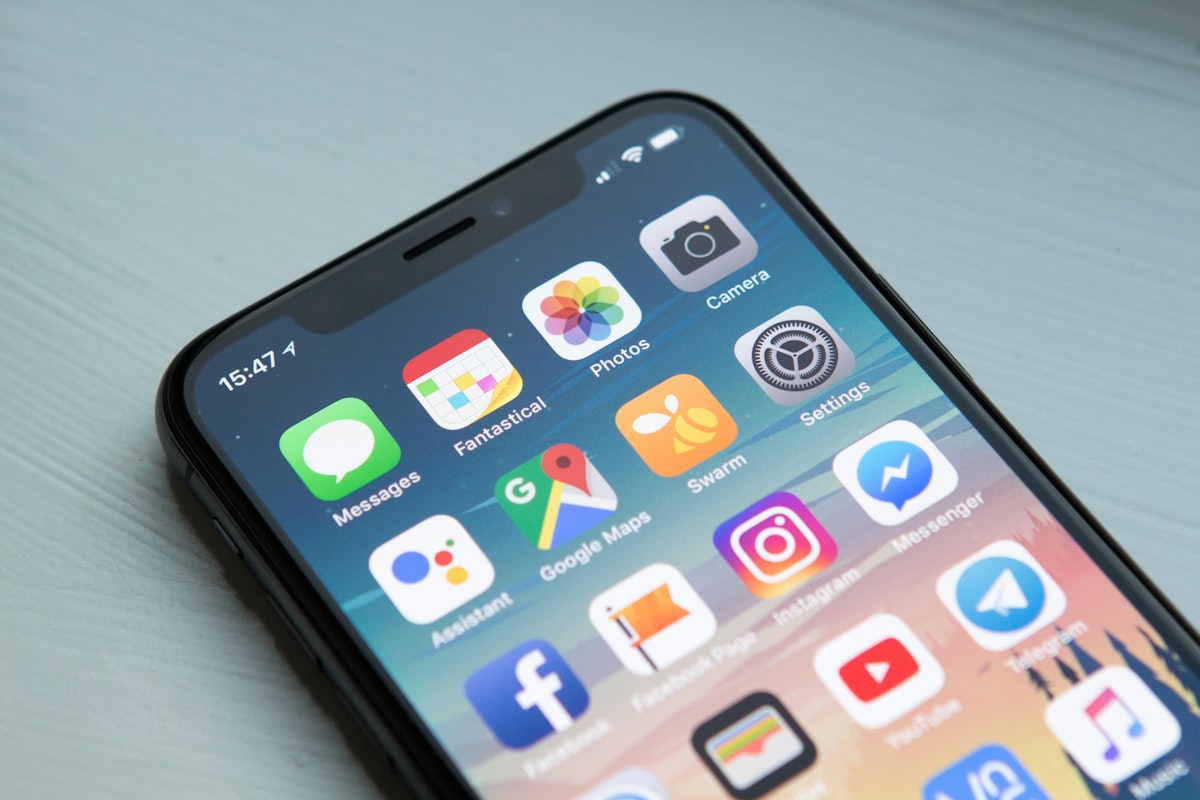
Your Phone Is Literally Destroying Your GPA
Ok hear me out. You sit down to study. You open your textbook. Two minutes in, you check Instagram. Close it. Back to reading. Your roommate texts you. You respond real quick. Back to the book. A notification pops up. You ignore it. But now you're thinking about it.
Studies found that the average college student gets interrupted by their phone every 3 to 4 minutes while studying. Every. Three. Minutes. And after each interruption, it takes about 23 minutes to fully get back into a deep focus state. Do the math on that.
You're not bad at studying. Your environment is just completely broken.
Why This Is Actually Harder Than It Should Be
Here's the thing about phones: they're designed by billion-dollar companies specifically to make you pick them up. The engineers who built TikTok and Instagram studied slot machine psychology to make their apps as addictive as possible. You're not weak for getting distracted. You're fighting a machine that's been optimized for decades against you.
So stop blaming yourself and start fixing your setup.
The Only Phone Strategies That Actually Work
Put it in another room. Not face-down. Another room.
I know you've heard "just turn it over" or "put it on do not disturb." Doesn't work. Research out of the University of Texas found that even having your phone on the desk face-down reduces your available cognitive capacity. Just knowing it's there pulls attention.
Put it in your backpack. Leave the backpack in your car. Or give it to your roommate for 2 hours. Whatever gets it out of arm's reach.
Use app timers with actual friction
Setting a 1-hour screen time limit on Instagram is useless because you can override it in one tap. Instead use apps like:
- Freedom (blocks apps across all devices simultaneously, $3/month)
- Opal (iPhone, actually hard to override)
- Cold Turkey (desktop, blocks websites too)
The key is adding real friction. If you have to jump through 4 hoops to unlock Reddit, you'll usually just... not.
The "boring phone" trick
My roommate swears by this. Before a study session, go into your phone settings and put it in grayscale mode. Black and white. Suddenly Instagram is ugly and boring. Less dopamine hit. Less temptation. It sounds dumb and it kind of is but it genuinely helps.
Fix Your Study Environment Too
Your phone isn't the only problem. Your whole environment is probably working against you.
Find a place that's boring on purpose
Your bedroom is terrible for studying. You associate it with sleeping, gaming, watching stuff. Your brain literally switches modes when you're in there. The library, a coffee shop you rarely go to, an empty classroom on a weekend, anywhere that your brain associates with "work" instead of "chill."
I used to try to study at my desk and wonder why I couldn't focus for more than 20 minutes. Moved to the third floor of the library and suddenly I could go 90 minutes without even wanting to check my phone. Environment shapes behavior way more than willpower does.
Headphones are not optional
Noise-canceling headphones changed my study game completely. You don't even need music. Just canceling out background chatter removes a massive source of distraction. If you can't afford noise-canceling, loop a single ambient track (brown noise, coffee shop sounds, lo-fi beats) to mask random interruptions.
Clean your physical space before you start
This sounds like productivity influencer nonsense but there's something to it. When your desk is cluttered, your brain has more "open loops" competing for attention. Takes 5 minutes to clear it, gets you into the headspace of actually working.
Time Blocking: Work With Your Brain's Limits
Your ability to focus deeply is a limited resource. It depletes throughout the day. Most people have 2 to 4 hours of genuine deep focus available per day, and the rest is shallow work or coasting.
Stop trying to study for 5-hour marathon sessions. They're inefficient and you hate them.
Instead:
- 25-minute focused blocks, 5-minute breaks (classic Pomodoro)
- Or 50-minute blocks, 10-minute breaks if you get into flow states easily
- After 4 blocks, take a 30-minute real break
- Stop studying if you haven't retained anything in the last 20 minutes. Seriously.
During breaks: get up, move around, look at something far away. Scrolling your phone during a study break doesn't let your brain recover. It's still consuming. If you need a real reset, stare out a window or take a short walk.
What to Actually Do During Your Study Sessions
Ok you've got your phone away, you're in the library, you have 50 minutes. Now what?
This is where a lot of people still go wrong. They read passively. Highlight everything. Reread the same page three times and still don't remember it.
Active studying is the only kind that works. That means:
- Reading a section and then closing the book and writing down everything you remember from it
- Doing practice problems before you feel ready (being wrong is how you learn)
- Talking through concepts out loud like you're teaching someone
- Making your own questions and answering them
For dense textbook material especially, something like textbooks.ai is genuinely useful here. You upload your textbook PDF and it generates practice questions, summaries, and quizzes pulled directly from your actual reading. So instead of passively highlighting chapter 7 for the third time, you're testing yourself on the material your professor is actually likely to ask about.
It doesn't replace reading but it makes your reading way more targeted. Like, you read, quiz yourself, see what you blanked on, go back to those specific sections. That loop. That's the stuff that sticks.
The "One Tab" Rule for Digital Studying
If you're studying on a laptop (which most people are), you're fighting a different battle: the entire internet is one click away.
Force yourself to have exactly one tab open. Whatever you're studying. No other tabs. Use a browser extension like OneTab or Tab Wrangler to collapse everything else.
Better yet, download your reading material and go offline. Turn on airplane mode. You won't die without the internet for 90 minutes, I promise.
For things like textbooks.ai, you can front-load your prep: spend 10 minutes generating all the practice questions for your chapter before you go heads-down, then close the browser and just work through the questions offline in a doc.
One Honest Thing About Willpower
Willpower is a terrible study strategy. It depletes. It's unreliable. And it requires you to fight yourself constantly, which is exhausting.
Good focus habits are about removing decisions and reducing friction for the right behaviors. Pack your bag the night before. Know exactly where you're studying before you get there. Have your materials already open before you sit down.
Every decision you don't have to make is cognitive energy you can spend on actually learning.
And honestly? If you're genuinely exhausted and haven't slept, no amount of productivity hacks will help. Sleep is the most important study tool you have. Going to bed an hour earlier does more for retention than staying up an extra hour grinding.
Actually Retain the Stuff You Studied
You finally get 90 minutes of focused study in. Great. Now make sure it sticks.
Before you close your notes, spend 5 minutes doing a brain dump: write down every key concept from the session without looking at anything. This is a retrieval practice technique and it's one of the most effective things you can do for long-term memory consolidation.
Then schedule a quick 15-minute review for 48 hours later. You'll be surprised how much you already forgot... and how quickly it comes back.
If you're using textbooks.ai for your reading, the spaced repetition guide pairs really well with it. Read, quiz, schedule your review. That's the loop.
TL;DR: The Setup That Actually Works
- Phone in another room (not face-down, not on silent - gone)
- Study in a location you associate with work
- Noise-canceling headphones or ambient sound
- 50-minute blocks max, real breaks between them
- One tab open, everything else collapsed or closed
- Active recall during the session, brain dump at the end
Fix the environment and the focus takes care of itself. You're not broken. The setup was.
If you want to squeeze more out of those focused study sessions, check out how to turn your notes into a study guide in 15 minutes or why you can't make yourself study if the real issue is actually motivation.